

How to benchmark your graphics card (GPU) - taylorhaplen

Thiago Trevisan/IDG
Sure, benchmarking your graphics card may sound like rocket science, merely it's not A hard as you might think. Bundle your sleeves, because this channelize will show you honorable how easy, pleasant, and important IT is to bench mark your GPU. And not just when you're overclocking! We'll cover benchmarking for both stability and functioning.
Why you should bench mark your GPU
First, though, here's why you should be benchmarking your nontextual matter card even if you aren't trying to pull round to the top of the competitive overclocking charts:
- To start a service line performance measured so that you know if your GPU is performing as it should by comparison to other standard results.
- To be able to compare your current PC's operation against your future hardware upgrades. How much performance leave you gain by buying a new graphics card? Now you'll know!
- To contain for stability and other vitals the likes of thermals, time speeds, etc.
1st, test for stability and temperatures
 Thiago Trevisan/IDG
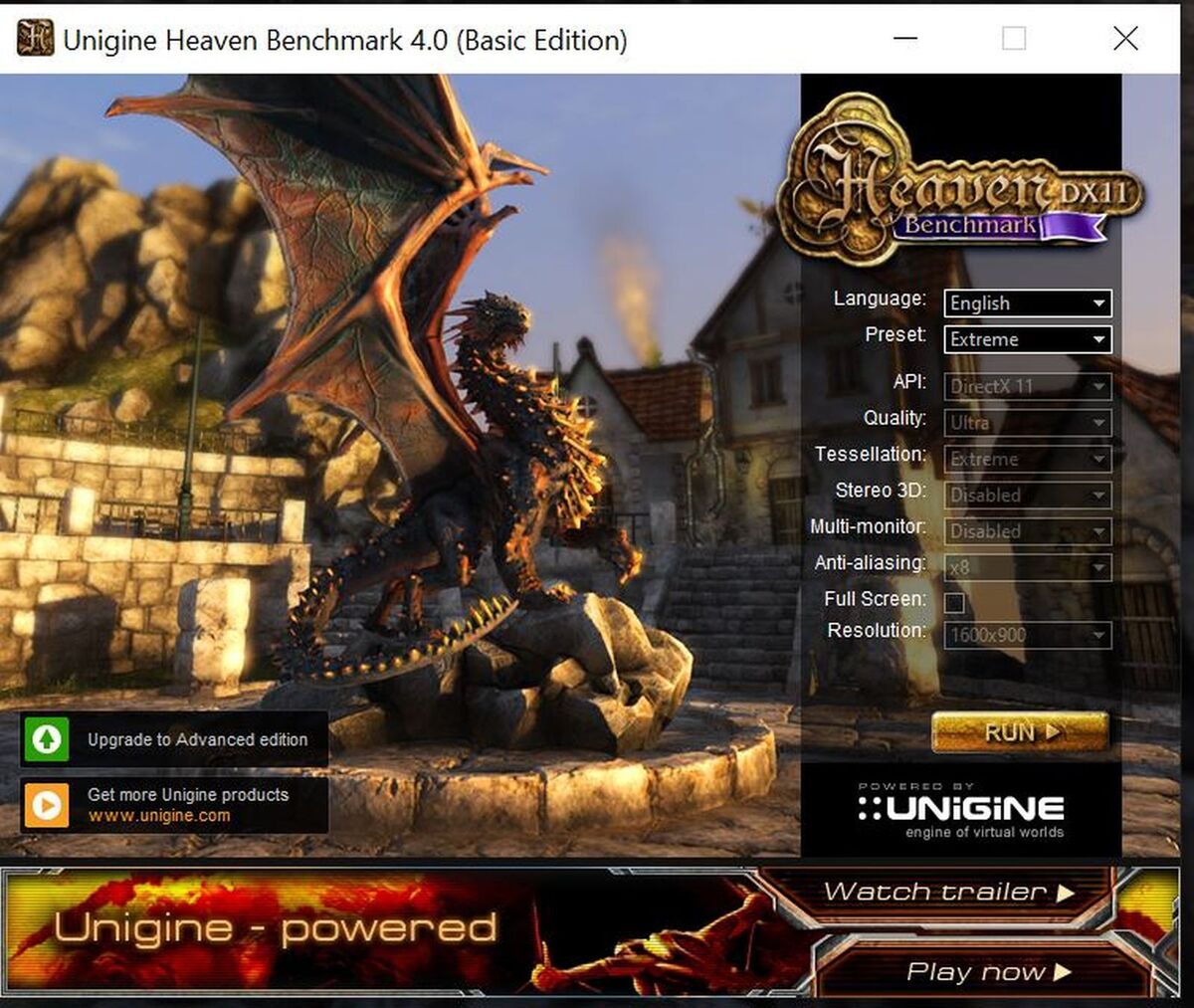
 Unigine's Heaven benchmark
Straightaway that you know wherefore you should benchmark, IT's time to get into the how. Let's start with constancy and vitals. It's rare, but sometimes a graphics card can be defective from the factory. That can beggarly a dead scorecard, but in many a cases you'll get what are called "artifacts"—basically imperfections connected the image, flickering, or even rhythmic colors.
The first program we're going to manipulation is Unigine Heaven 4.0. It's gratis for personalized use of goods and services and runs a loop of a graphical environment that really utilizes your GPU. The first agenda here is to make sure your graphics card can discharge without shutting down or displaying any weird graphical glitches, so you should allow it to flow Promised land for at any rate 30 minutes, to allow the GPU to get up to temperature.
If all looks good, you'll as wel wishing to keep an eye on the vitals, Those leave be displayed in the top right nook, along with your GPU information.
The first vital is temperature, which can indicate various potential issues with your hardware and case airflow. If your GPU quickly reaches its maximum temperature limit, it could indicate a raw (simply attainable) issue with its thermal paste, or (to a greater extent likely) restricted airflow in your case if at that place ISN't enough clearance for the fans to get cool air.
 Thiago Trevisan/IDG
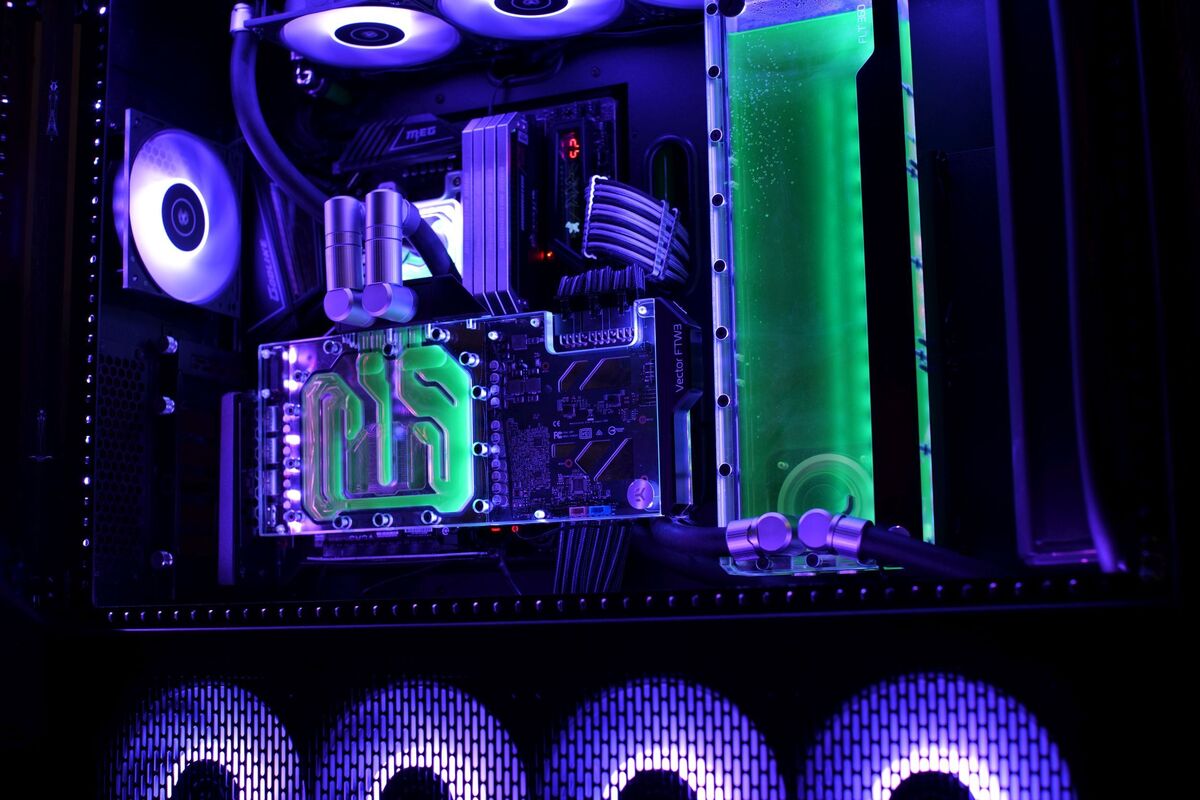
 A custom liquid-cooled GPU setup created by the author.
A good example of Holocene epoch issues have been in the GDDR6X memory temperatures of Nvidia's GeForce RTX 3090 Founders Edition. You'd ne'er know without emphasis-testing the GPU that the memory can get identical or so the VRAM temperature limit, possibly throttling your performance. (Some populate have successfully updated their natural spring pads and noticed a important improvement)
How do you recognize the normal operating temperature for your graphics card's GPU core? IT varies away model (Google your GPU name for concrete inside information) but basic extension-vogue coolers can often run as high as 84 Anders Celsius, while several larger graphics card game with hefty heat sinks and multiple fans—corresponding EVGA's marvelous FTW3 series—can atomic number 4 lower in the 60s and 70s. You'll know if you're in the danger zone if your temperatures are in the higher 80s, and your fans are spinning aggressively; this often will indicate poor case air flow. Add some fans or open approximately case panels and temperatures should improve. That's a direct benefit of cognition gained patc benchmarking and testing your GPU.
You commode also follow the core clock and memory clock of your GPU, to make sure it is playing near the intended specs. An easier way is to just run the benchmark pick in Unigine Heaven, and then you john liken your score with others online and get a good baseline to make sure you're in the ballpark.
How to benchmark your GPU to gauge service line performance
 Thiago Trevisan/IDG
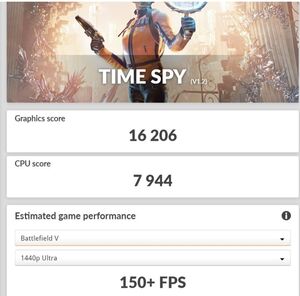
 An example of 3DMark Time Spy scores and estimated game performance.
Aft you've tested for stability and thermals, you can take your benchmarking level up to a doctorate aside examination performance. Here we'll use the popular 3DMark benchmarking suite, which includes some free modes. Time Spy (which tests DirectX 12 graphics performance) and Port Royal (ray tracing performance) are some of the most widely misused benchmarks around. 3DMark even has an online dormitory of renown where you fundament compare your scores against others!
What numbers should you keep an eye on? It's simple. There's extraordinary total score, and then separate individual scores for the CPU and GPU if you're running Time Spy. Port Royal just has GPU scads and a total nock. If you make a tweak to a component in your PC, the one-on-one scores give you a better idea of the touch it has on the total score. (This especially serviceable if you're looking to overclock. Have a look at our article on Nvidia's Automatic overclocking creature in GeForce Experience.)
 Thiago Trevisan/IDG
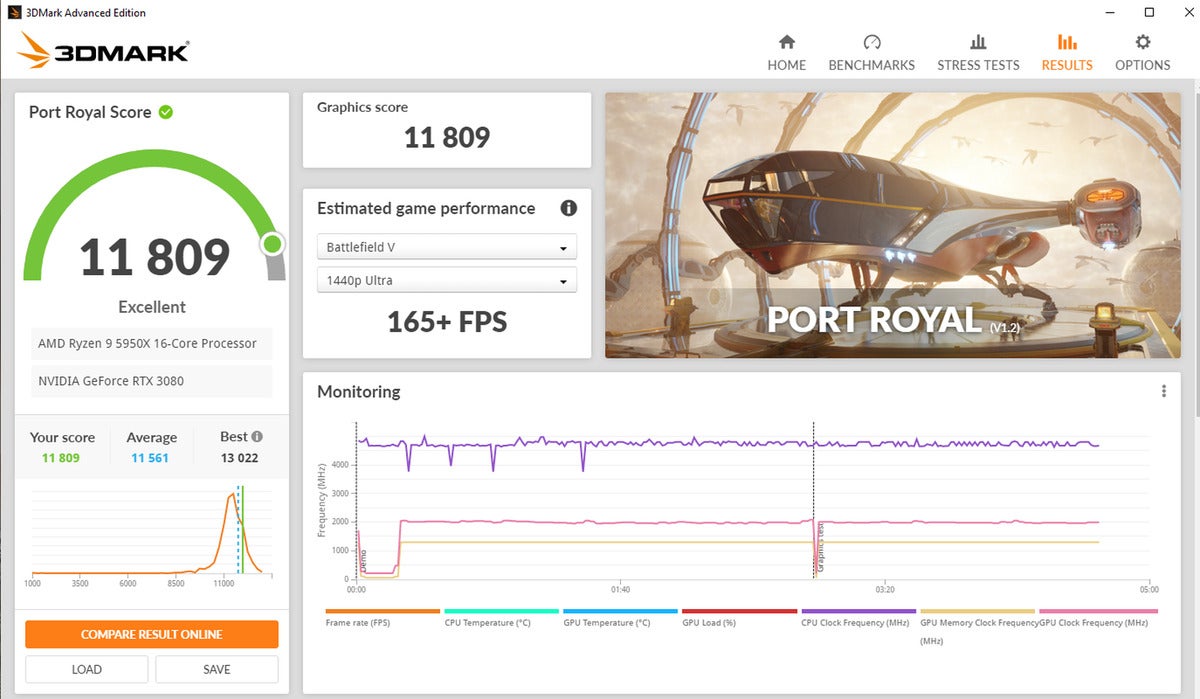
 A full page of piles and results for 3DMark's Port Crowned screen.
3DMark mark ass also show you the guess frame rate performance you'd get on a chosen game and firmness, which is very useful selective information to gauge your performance and equate it against what unexampled upgrades Crataegus oxycantha accomplish for you. If you'Re doing some overclocking, running 3DMark terminate too discover instabilities in your organisation, such as crashes, thus you can adjust your numbers and try again.
How to benchmark your GPU in games
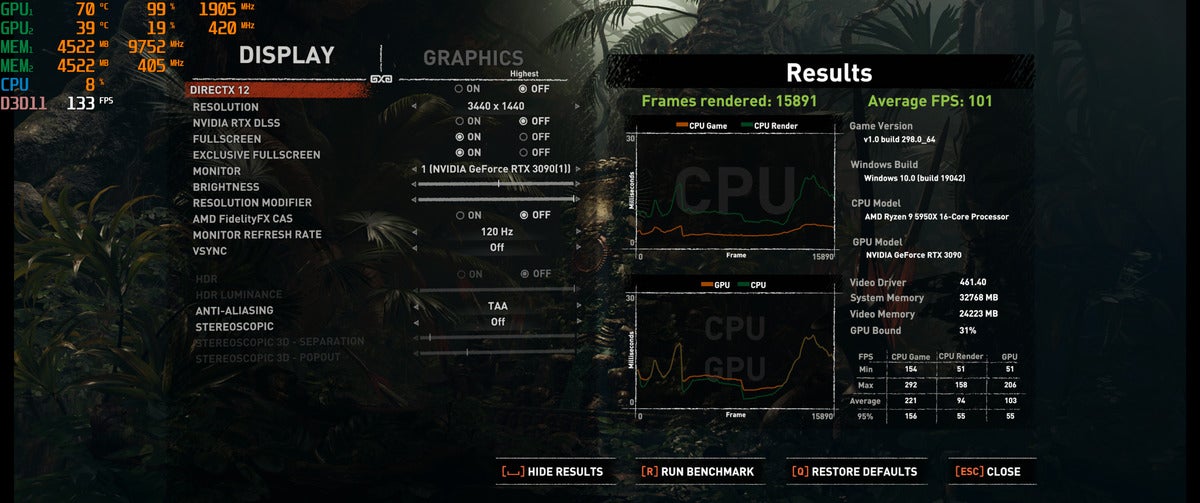
Another very fun manner to benchmark your GPU is to use the automated benchmarks built into many games. (Check our GeForce RTX 3080 Ti review to see some vulgar ones, or the list of games with built-in benchmarks at the always fantastic PC Play Wiki.)
 Thiago Trevisan/IDG
 The results overview fromShadow of the Tomb Raider's constitutional benchmark.
Shadow of the Tomb Raider is a favorite of mine because you tush easily see the frames per second performance that you're getting in each scene, giving you a good indication of how the game volition pass overall. As a fillip, if you rise your graphics card or other PC hardware, you can re-run the bench mark and you'll know exactly what gains you've netted.
More advanced gamers can use software program such as Fraps operating room OCAT to manually benchmark performance of games that don't induce a inherent bench mark, but this will require more sentence, testing, and reckoning out a repeatable examination scenario to avoid expected vista-to-scene variance.
 Thiago Trevisan/IDG
 Mettlesome on.
There you have it! You've graduated to GPU benchmarking affirmative. Now you know how to check out that your nontextual matter card is stable and fully functioning, how to validate performance numbers to make a point your GPU is up to specification, you bet to overestimate the service line carrying out of your hardware for proximo upgrade comparisons. And who knows? You may enjoy benchmarking so much, you'll turn it into a hobby!
Note: When you buy something after clicking links in our articles, we may earn a half-size commission. Read our associate link insurance for more details.

Source: https://www.pcworld.com/article/394845/how-to-benchmark-your-graphics-card.html
Posted by: taylorhaplen.blogspot.com
0 Response to "How to benchmark your graphics card (GPU) - taylorhaplen"
Post a Comment